


Owners expect itching to settle once the frost kills the pollen. For a large number of Calgary pets it does the opposite. Leaf litter releases mould spores, the furnace goes on and stirs months of settled dust, the air dries out, and everyone moves indoors. The result is a distinct autumn flare.
Why the itch does not stop with the first frost
Grass and weed pollen genuinely does fade once Calgary gets its first hard frost, usually in September. What replaces it is less obvious and, for many pets, worse.
Mould spores. Wet fallen leaves, lawn thatch, compost and damp bark mulch produce enormous quantities of spores through the autumn. A dog that noses along a leaf-covered boulevard is inhaling and wearing them.
The furnace. This is the big one in Calgary, and the timing is exact. Turning the heating on after months idle blows out dust, dander and debris that has been sitting in the ducts all summer. Many owners can date the flare to the week the furnace came on.
Dry indoor air. Calgary is dry to begin with, and heated indoor air is drier still. Dry skin is itchier skin, and a compromised skin barrier lets allergens through more easily.
Dust mites. Populations build indoors through autumn and winter, living in bedding, carpets, upholstery and your pet’s own bed.
Everyone indoors, longer. More hours in contact with carpets and soft furnishings, less time in fresh air.
So a pet that was itchy in July for one reason can easily be itchy in October for entirely different ones, and where it itches often changes with them.
What allergy looks like in a pet
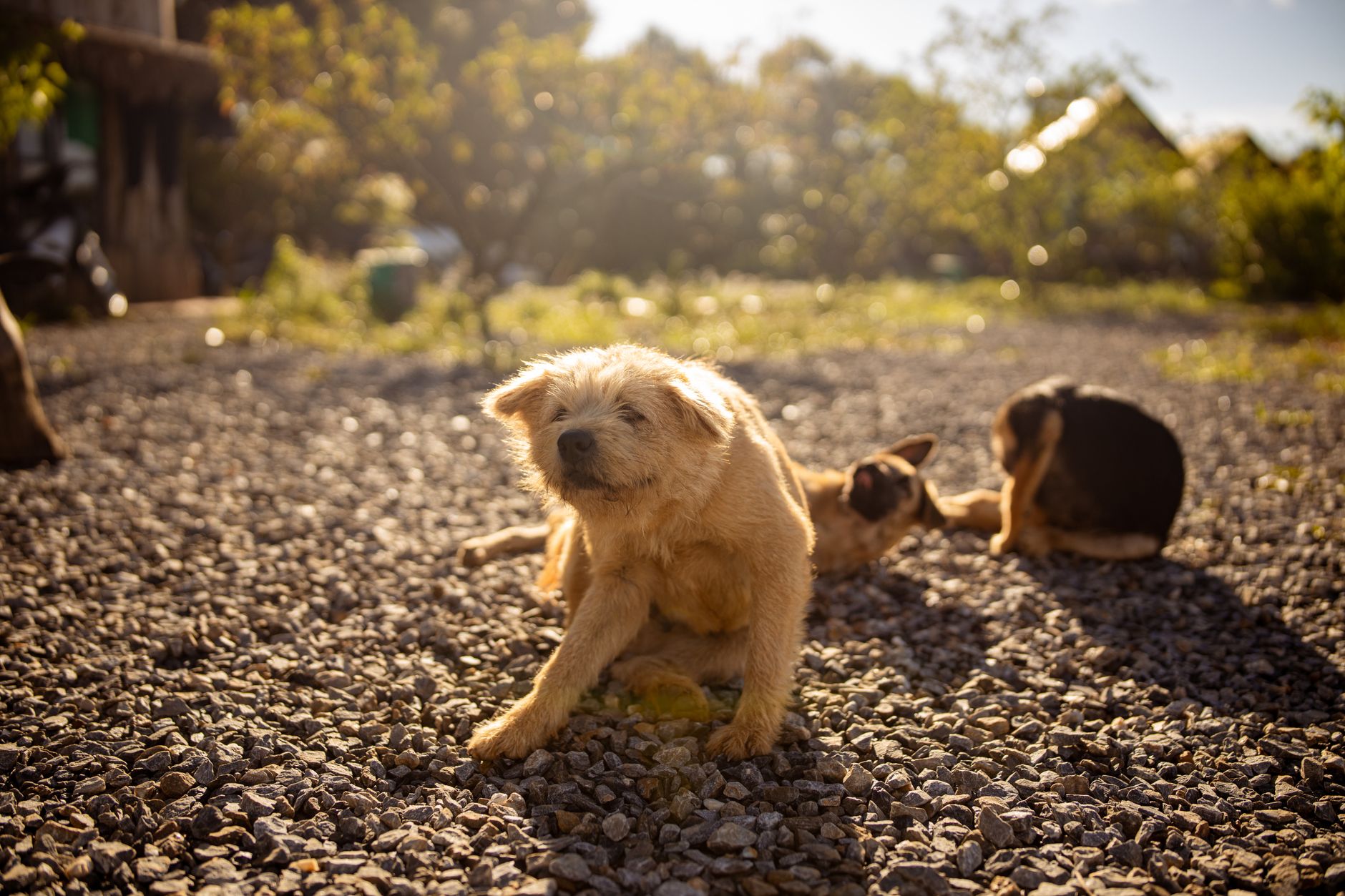
This is where it differs from people. Dogs and cats rarely sneeze and stream. They itch.
In dogs, watch the pattern more than the intensity:
- Licking or chewing at the paws, often one in particular, with rust-brown saliva staining on white fur
- Rubbing the face along carpet or furniture
- Scratching at the ears, head shaking, or ear problems that keep returning
- Chewing at the belly, groin, armpits or base of the tail
- Redness in skin folds, between the toes and under the front legs
- Scooting, which is sometimes anal glands and sometimes allergic irritation
- Skin that has darkened, thickened or gone leathery in patches
- A greasy coat, dandruff or a distinct smell
- Hot spots, the angry weeping patches that appear overnight
In cats it looks different and is missed constantly. Over-grooming out of sight, leaving thin or bald strips along the belly and inner thighs. Small crusty scabs along the back and neck that you find by hand before you see them. Chewing at the base of the tail. More hairballs and vomiting from swallowing fur. Sores on the lip or chin. Increased hiding or irritability.
A cat losing hair without scratching in front of you is almost always grooming it off when you are not watching.
Why it keeps coming back to the ears
Ear problems and allergies are closely connected, and a dog with repeated ear trouble should be assessed for underlying allergy rather than having each episode handled in isolation.
The ear canal is lined with skin. When skin elsewhere is inflamed, that canal is inflamed too, which changes the environment inside and lets yeast and bacteria multiply. Chasing individual episodes without identifying the driver is how dogs end up with permanently thickened, narrowed, painful canals.
What is not allergy
Plenty of itchy pets are itchy for other reasons, and assuming allergy delays the right answer.
Fleas matter most. Flea allergy is common and a single bite sets a sensitive pet off, so a pet can be miserable without you ever finding a flea. Calgary winters do not clear them from a heated house, and stopping prevention in September is a frequent cause of a mysterious autumn itch.
Mites, including the intensely itchy contagious one, also need excluding. So do bacterial and yeast overgrowth, ringworm, and in older pets some hormonal conditions that change coat and skin.
Our medical services team will look at the distribution of the itch, the state of the skin and coat, and take samples where they will change the answer, rather than assuming.
What genuinely helps at home
None of this replaces an examination, and none of it involves giving your pet anything.
- Wipe the paws and belly after every walk. A damp cloth removes spores that would otherwise sit against the skin all evening. Highest-value habit here, thirty seconds
- Get the furnace and ducts serviced before you turn the system on for the season, and change filters more often
- Run a humidifier if your house is very dry. This matters more in Calgary than almost anywhere
- Wash pet bedding weekly on a hot wash and dry it fully. It is the main dust mite reservoir
- Vacuum more often through autumn, upholstery included, and empty the vacuum outside
- Clear wet leaves from the areas your dog uses
- Keep flea prevention going year round rather than stopping in September. Ask us what suits your pet
- Do not start bathing on a whim. The wrong product or too-frequent washing strips the skin and makes things worse
- Keep a diary for a fortnight, noting where and when the itching happens. Patterns invisible day to day become obvious on paper
The thing not to do
Please do not give your pet anything from your own cabinet, and do not use a product bought for another animal. Reaching for something intended for people is a common home experiment and it is frequently unsuitable, sometimes dangerous, and often masks the picture enough to make the real problem harder to identify later. Creams intended for human skin, tea tree preparations and essential oils are all worth specifically avoiding, and are genuinely dangerous to cats.
Bring your pet in and let the veterinary team decide what is appropriate. Our wellness services are where the year-round side gets planned, since allergic pets do far better with a plan than with a series of emergencies. Autumn is a sensible time for that conversation, and the seasonal checklist in our guide to preventive care for Calgary pets applies just as much going into winter.
Frequently asked questions
My dog was fine all summer and started chewing his paws in October. Why now?
Autumn has its own triggers. Mould spores from wet leaves are one, and indoor allergens rise sharply once the house closes up and the furnace comes on. It is entirely normal for a pet to be comfortable in one season and itchy in another, and that pattern is itself useful information.
The itching started the week we turned the heat on. Coincidence?
Probably not, and it is one of the more common histories we hear in Calgary. Turning the furnace on circulates months of settled dust and dander, and the dry heated air makes already irritated skin itchier. Servicing the system and changing filters is worth doing before the flare rather than after.
Can I just give my dog something from the cabinet?
Please do not without asking us. Human products vary in what else they contain, some are actively harmful to pets, and the amount that matters is completely different. There is also a diagnostic cost, since partially suppressing the signs before an examination makes it harder to work out what is going on.
Would changing food help?
Sometimes, but food is a less common cause than environmental allergens, and a food-related pet is usually itchy all year rather than seasonally. Switching foods repeatedly on your own muddies the picture without answering the question. If food is worth investigating there is a specific way to do it properly.
My cat is losing fur but I never see her scratch. Is that allergy?
Very possibly, and it is one of the most common presentations. Cats groom secretly and often at night, so owners see the result rather than the behaviour. Fur broken off short rather than falling out at the root points strongly to over-grooming.
Do I really need flea prevention through a Calgary winter?
Yes. Fleas survive comfortably in a heated home all year, and a flea-allergic pet reacts to a single bite. Stopping in September is one of the more common reasons for an autumn itch that seems to come from nowhere.
Speak to the team at NorthWest Animal Hospital
If your pet has become itchier since the furnace went on, book an examination rather than trying products at home. Call us on (403) 930-3500.
Published by the team at NorthWest Animal Hospital.
This article is for general educational purposes only and is not a substitute for an in-person veterinary examination or advice about your individual pet. If you have an urgent concern about your pet, contact NorthWest Animal Hospital or your nearest emergency veterinary hospital right away.
NorthWest Animal Hospital
110, 141 Carrington Plaza NW, Calgary, AB T3P 1Y3
Phone: (403) 930-3500
Email: info@nwvet.ca
Hours: Tuesday, Wednesday, Thursday and Friday 9:00 AM to 7:00 PM; Saturday, Sunday and Monday 9:00 AM to 6:00 PM