



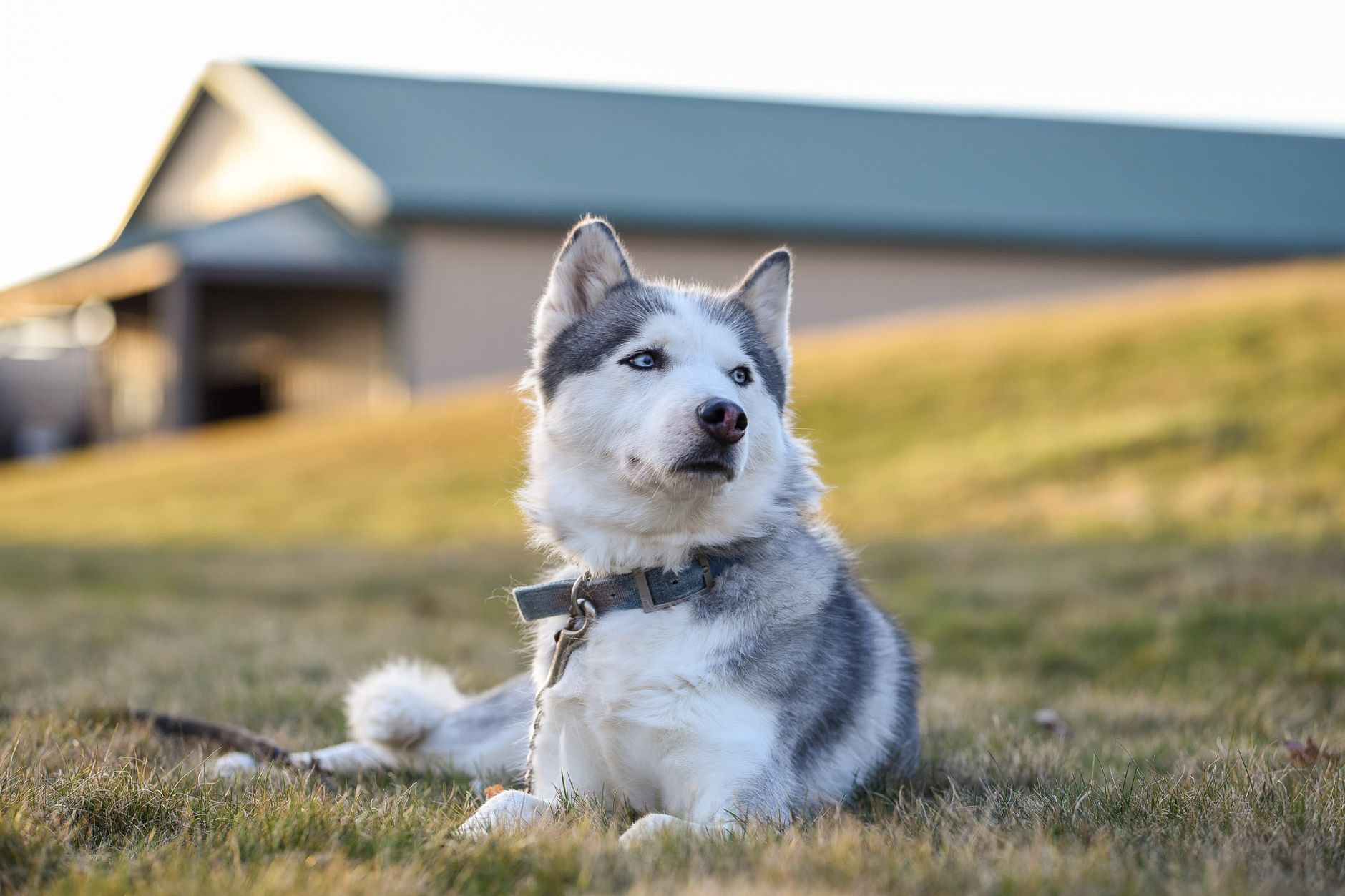
Shedding is driven mainly by day length rather than by temperature. As the Calgary daylight shortens, a double-coated dog drops the light summer coat and grows a dense winter undercoat underneath. That new undercoat is what mats, and mats hold moisture against skin. Most of the work is in the layer you cannot see.
Why the coat changes now, and why the weather has little to do with it
The common assumption is that pets shed when it gets warm and grow coat when it gets cold. The actual trigger is photoperiod, the number of daylight hours, which is why the autumn change begins in September here while the afternoons are still pleasant.
That matters in two practical ways. First, a chinook in November does not cancel the winter coat, so a dog carrying a full undercoat through a plus-twelve afternoon is simply hot. Second, pets who live mostly indoors under artificial light get a muddled signal and shed moderately all year rather than in two clear bursts, which is why an indoor cat seems to shed endlessly.
Northwest Calgary adds a particular combination: a short, dry autumn, then months of furnace-dried indoor air, then wild temperature swings. The coat has to do a lot of work, and it only works properly if it is clean, dry and not matted.
The two coats, and why that matters
A double-coated dog has long, coarse guard hairs on top and a soft, dense undercoat beneath. The guard hairs shed water and block sun. The undercoat traps a layer of still air and does the actual insulating.
When the undercoat sheds, the loose hair does not fall out cleanly. It stays tangled in the guard hairs, and it keeps doing that until something removes it. Left there it compacts, and compacted hair close to the skin becomes a mat.
This is why shaving a double coat is the wrong answer. Shaving takes off both layers at once, the guard hairs that block sun and shed water and the undercoat that does the insulating, and in some dogs the coat takes a year or more to come back and returns a different texture. A dog who is uncomfortable in a thick coat needs the dead undercoat raked out, not the whole coat removed.
What a mat actually does
A mat is not a cosmetic problem. It is a dense pad of hair pulled tight against skin, and it causes trouble in several ways at once.
- It pulls constantly on the skin underneath, which is sore in the way a tight braid is sore
- It traps moisture from snow, slush and rain, and the skin under it stays damp
- Damp, airless skin lets surface bacteria and yeast overgrow, which is itchy and smells
- It hides everything: wounds, lumps, ticks, flea dirt, hot spots
- It restricts movement where it forms in an armpit or a groin
- It stops the coat insulating, so a matted winter coat is worse than a thin one
The places to check are the ones people miss: behind and below the ears, under the collar, the armpits, the groin, the back of the thighs, the base of the tail, and between the toes. Run your fingers against the lie of the coat rather than looking at it, because a flat-looking coat can be solid underneath.
Do not cut a mat out with scissors. Skin tents up into the base of a mat, and it is extremely easy to cut through it without realizing. Mats that will not comb out need clippers, and a tight one against skin is a job for our grooming services team.
Getting ahead of it
- Use the right tool for the undercoat. An undercoat rake or deshedding tool reaches the dead layer; a slicker brush works the top coat but will not get down to it on its own. A metal comb is how you check the job.
- Brush more often, for less time. Ten minutes most days beats an hour on Sunday, and it keeps the job comfortable rather than something your dog learns to avoid.
- Work in sections, down to the skin. If the comb does not reach skin, the coat is not brushed.
- Dry thoroughly after snow and slush. Belly, legs, feet and the fur between the toes. A damp dog who sleeps on a damp coat is how the skin trouble starts.
- Take the collar off at home if your dog will tolerate it. Under the collar is one of the most reliable places to find a mat.
- Bathe less, brush more. Frequent washing strips the coat oils that keep the guard hairs water-resistant. Brush out loose hair before any bath, because wetting a loose undercoat sets it.
- Watch the static. Dry Calgary indoor air makes fine coats cling and tangle. A humidifier in the room where your pet sleeps helps the coat as much as it helps the skin.
- Get the coat raked out before the snow, not after. A coat going into winter clean and raked out insulates. A coat going in matted does not. If it is already matted, that is a dematting appointment with us rather than a brush-out at home.
Cats shed too, and they tell you differently
Long-haired cats mat in the same places, with the armpits, the belly and the back end the usual sites, and a mat on a cat’s belly is easy to miss entirely because cats do not often let you look there.
Two cat-specific things to watch. A cat who suddenly cannot keep up with grooming, or who has stopped grooming a particular area, is often telling you something hurts, and sore hips or a sore back are common reasons an older cat stops reaching their rear end. Book a check rather than only tackling the coat, because the mats are the symptom. And a cat who is grooming far more than usual, to the point of thin patches or broken stubble on the belly and inner thighs, is overgrooming rather than shedding. That is usually driven by itch rather than stress, so it needs an examination and a parasite check rather than a change of brush.
Increased grooming during the autumn change also means more swallowed hair, so more frequent hairballs are expected. Hairballs several times a week, retching with nothing produced, or a cat who is off food alongside them, are not. Book an examination, and if your cat is retching repeatedly and has not eaten, phone us the same day.
When shedding is not just shedding
A heavy autumn shed in a healthy pet is normal, and the hair comes out evenly across the body. What is not normal:
- Bald patches, or thin coat in a symmetrical pattern on both sides
- Skin that is flaky, greasy, darkened or thickened under the thinning coat
- Hair that pulls out in clumps with no effort, or that does not regrow
- Heavy shedding with constant itching, chewing or licking
- A coat that has changed texture, gone dull, or feels brittle
- Shedding alongside weight change, drinking more, low energy or heat-seeking
Several of those point at something internal rather than at the coat. An underactive thyroid is a common one in middle-aged dogs and typically comes with weight gain, low energy and a dull, thinning coat. An overactive adrenal gland produces thin skin, a pot-bellied look and increased drinking. Parasites, environmental allergies and an unbalanced diet all show up in the coat as well.
Come in through our urgent care if there is a hot spot, a sore patch under a mat, or skin that has broken open. For a coat that is thinning or changing rather than simply shedding, our diagnostics team runs the bloodwork, thyroid testing and skin sampling that separate a hormone problem from a parasite problem from an allergy. Our medical services team manages what follows, and our wellness services team is the right place to raise a coat you are not happy with before it becomes a skin problem.
We are open 9:00 AM to 7:00 PM on Tuesday, Wednesday, Thursday and Friday, and 9:00 AM to 6:00 PM on Saturday, Sunday and Monday. Coat and skin problems rarely need an overnight visit, but a hot spot can go from a damp patch to a raw, painful area in a day, so if one appears in the evening or overnight and your pet will not leave it alone, go to an open emergency veterinary hospital rather than waiting until we open at nine the next morning.
Our guide to autumn allergy flares in pets covers the other reason a coat goes downhill at this time of year, and the two problems often arrive together.
Questions we are asked
How much shedding is too much?
Volume alone is rarely the problem. A husky in October produces an alarming amount of hair and is completely healthy. What matters is the pattern: if the hair is coming out evenly all over, the skin underneath looks normal and your dog is comfortable, that is a seasonal shed. If you can see scalp, if the thinning is symmetrical on both flanks, or if the skin is flaky, dark or sore, that is worth a visit regardless of volume.
Should I shave my double-coated dog before winter?
No. The undercoat is the insulation and the guard hairs are the weather barrier, so shaving removes both the warmth and the protection, and in some dogs the coat never returns to what it was. If your dog is overheating indoors, the answer is to rake the dead undercoat out, which reduces bulk without removing the working coat. Short-coated and single-coated breeds are a different matter, and clipping those is a cosmetic decision rather than a risk.
My dog has a mat the size of my palm behind his ear. Can I cut it off?
Please do not. Skin lifts into the underside of a mat that size, and scissor injuries from exactly this are common and surprisingly deep. Book him in: we can clip it out safely, look at the skin underneath, which is often sore or infected, and show you where the next one will form. It is a quick visit and a much better outcome than a wound that needs stitches.
Why is my indoor cat shedding in December?
Because the trigger is light rather than cold, and a cat living under household lighting never gets a clear seasonal signal. The result is low-level shedding all year instead of two defined moults. It is normal. What is worth looking at is a change in the pattern: a cat who starts shedding noticeably more, develops bald patches, or has a coat that feels greasy or clumped.
Does brushing actually reduce how much hair ends up on the sofa?
Yes, substantially, because you are collecting the dead hair before it falls. It also does the more important job of stopping that hair compacting into mats near the skin. The brushing that achieves this reaches the skin rather than gliding over the top, which is why the tool matters more than the time spent.
Is the dry furnace air bad for my pet’s coat?
It makes a difference, and it is easy to improve. Very dry indoor air pulls moisture out of skin, which shows up as flaking, static and a coat that tangles more readily. Around forty to forty-five percent relative humidity suits most households. Do not push it higher, because above roughly fifty percent you start to favour house dust mites and get condensation on cold windows.
My pet hates being brushed. Any suggestions?
Shorten the sessions right down, to a minute or two, and stop while it is still going well rather than when your pet objects. Brush where they already like being touched before moving to the sensitive areas, and pair it with something they enjoy. For a pet who is genuinely frightened or who has a painful mat, forcing it makes the next attempt harder; let us sort the coat out first so you are starting from comfortable.
Speak to the team at NorthWest Animal Hospital
If your pet has a mat you cannot work out, a sore or broken patch of skin, or a coat that is thinning rather than shedding, phone us and book a visit. Outside our hours, go to an open emergency veterinary hospital and phone ahead before you leave.
Published by the team at NorthWest Animal Hospital.
This article is educational in nature and is not a replacement for hands-on assessment of your own pet by a veterinarian.
NorthWest Animal Hospital
110, 141 Carrington Plaza NW, Calgary, AB T3P 1Y3
Phone: (403) 930-3500
Email: info@nwvet.ca
Hours: Tuesday, Wednesday, Thursday and Friday 9:00 AM to 7:00 PM; Saturday, Sunday and Monday 9:00 AM to 6:00 PM